Care
American Cocker Spaniel Health: Screening & Care
A useful health plan is not a promise that disease can be prevented. It combines informed observation, prompt veterinary attention, individualized preventive care and honest interpretation of the American Cocker Spaniel's current breeding-screening program.
This guide cannot diagnose a dog, determine a safe delay, or recommend a drug or dose. If your dog is distressed, deteriorating quickly, has trouble breathing, collapses, has a seizure, or develops a suddenly painful or vision-impaired eye, contact a veterinarian or emergency hospital now.
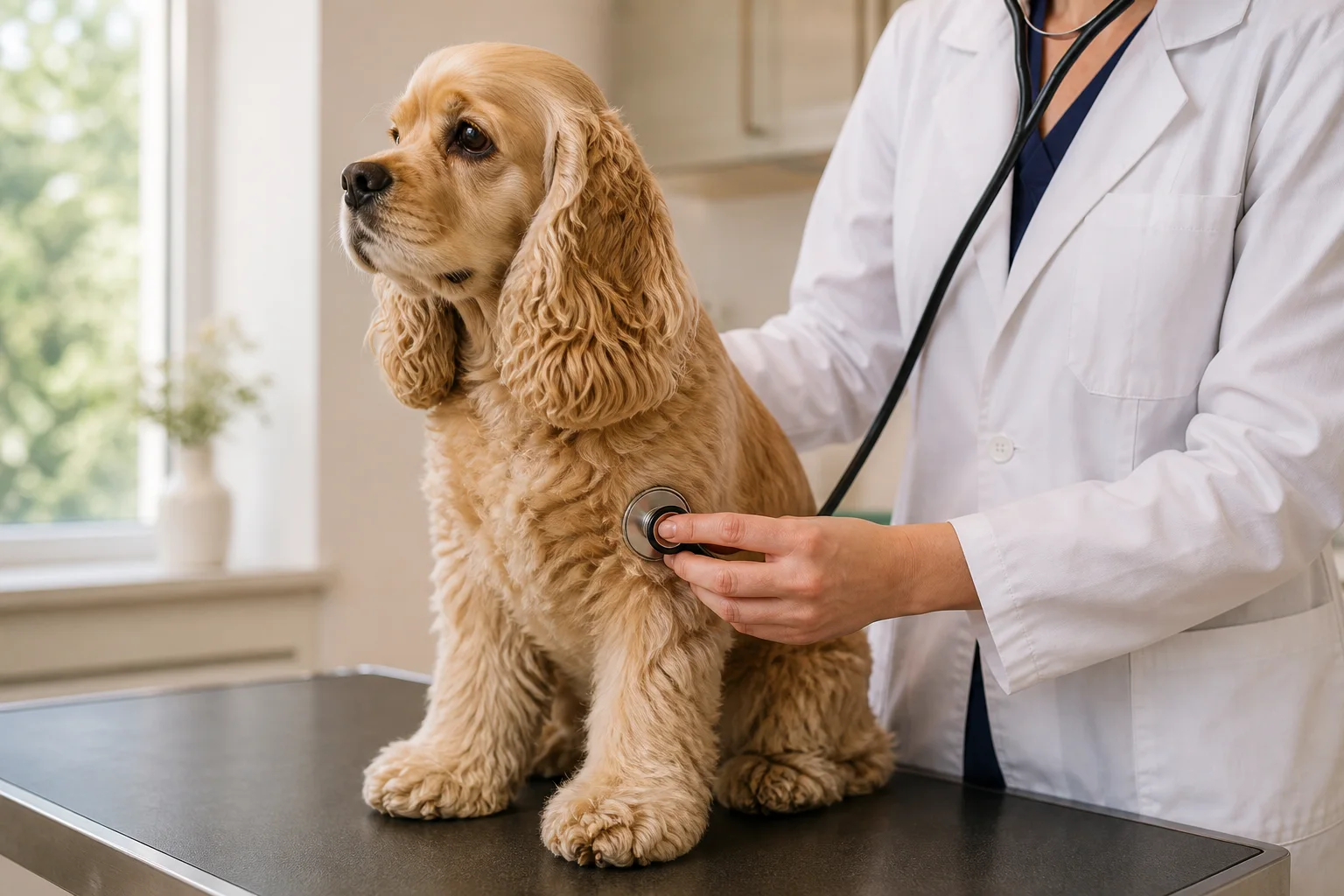
Breed information is best used to ask better questions, not to predict an individual dog's future. A predisposition changes probability; it does not establish a diagnosis. Conversely, tested parents reduce uncertainty for the conditions assessed but cannot guarantee that a puppy will never become ill. Keep the dog's own history, examination findings and lifestyle at the center of every decision.
Emergency, consultation or follow-up?#
When something changes, call a veterinary practice and describe what you see, when it began, whether it is worsening, and any medication, food or possible toxin exposure. The practice can triage with information this page cannot obtain. The categories below are decision aids, not a complete list.
| Response | Examples | What to do |
|---|---|---|
| Emergency now | Breathing difficulty; collapse or loss of consciousness; repeated seizures; uncontrolled bleeding; suspected poisoning; major trauma; inability to stand; pale or blue-gray gums with weakness; sudden vision loss; or a red, cloudy, enlarged or intensely painful eye. | Call the nearest emergency service and travel as directed. Do not wait for an online reply or give human medication. |
| Prompt consultation | New squinting or eye discharge; ear pain, odor, discharge or persistent head shaking; repeated vomiting or diarrhea; refusal of food; new lameness; marked itching; a new cough; or a clear change in thirst, urination or behavior. | Contact the regular clinic promptly for triage. Same-day assessment may be advised depending on severity, duration and the dog's history. |
| Planned follow-up | Slow weight or mobility change, a nonpainful lump, gradual coat change, stable chronic signs, preventive-care questions, or rechecks and monitoring requested by the veterinarian. | Record the trend with dates, photographs or video and arrange the recommended appointment. Escalate sooner if pain, distress or rapid progression appears. |
The Merck Veterinary Manual's emergency overview recommends knowing the nearest after-hours hospital before it is needed. Save the address and phone number, plan transport, and keep the dog's medication list and medical summary accessible.
Eye conditions#
Eyes are central to the breed's formal screening program, but “eye test” can mean two different things. An OFA Companion Animal Eye Registry (CAER) examination is a breeding screen performed by a board-certified veterinary ophthalmologist after dilation. It looks for observable inherited eye disease. OFA stresses that it is not a comprehensive clinical eye examination: routine CAER screening does not include tear testing, corneal stain or eye-pressure measurement, and it cannot identify every early or genetic condition.

Cataract, progressive retinal atrophy, glaucoma, dry eye, corneal injury and eyelid or eyelash abnormalities are different disorders with different tests and treatments. Appearance alone cannot separate them. Squinting, rubbing, a closed eye, redness, cloudiness, unequal pupils, apparent vision loss or a change in eye size deserves veterinary triage. Acute glaucoma can be painful and sight-threatening; the Merck Veterinary Manual glaucoma guide advises immediate veterinary attention for suspected signs.
At home, look rather than treat: compare both eyes in similar light and note discharge, comfort and navigation. Do not use leftover drops, because products appropriate for one diagnosis may be unsafe for another. A normal CAER result supports a breeding decision at one point in time; it does not clear a symptomatic pet.
Ear infections#
Otitis externa means inflammation of the external ear canal, not one single infection. Parasites, foreign material, allergy, bacteria, yeast and middle-ear disease can contribute; ear shape can increase susceptibility. Cocker Spaniels are also recognized in Cornell's clinical material on chronic ear disease as predisposed to canal narrowing after repeated inflammation. That makes early investigation more useful than repeatedly masking odor or discharge.
Check the visible ear flap and entrance during grooming. Head shaking, scratching, pain, redness, swelling, odor or discharge should prompt a call to the clinic. Diagnosis commonly requires an otoscopic examination and microscopic assessment of material from the canal, because treatment depends on the cause and on whether the eardrum is intact. The current Merck Veterinary Manual owner guide to otitis externa emphasizes this range of causes.
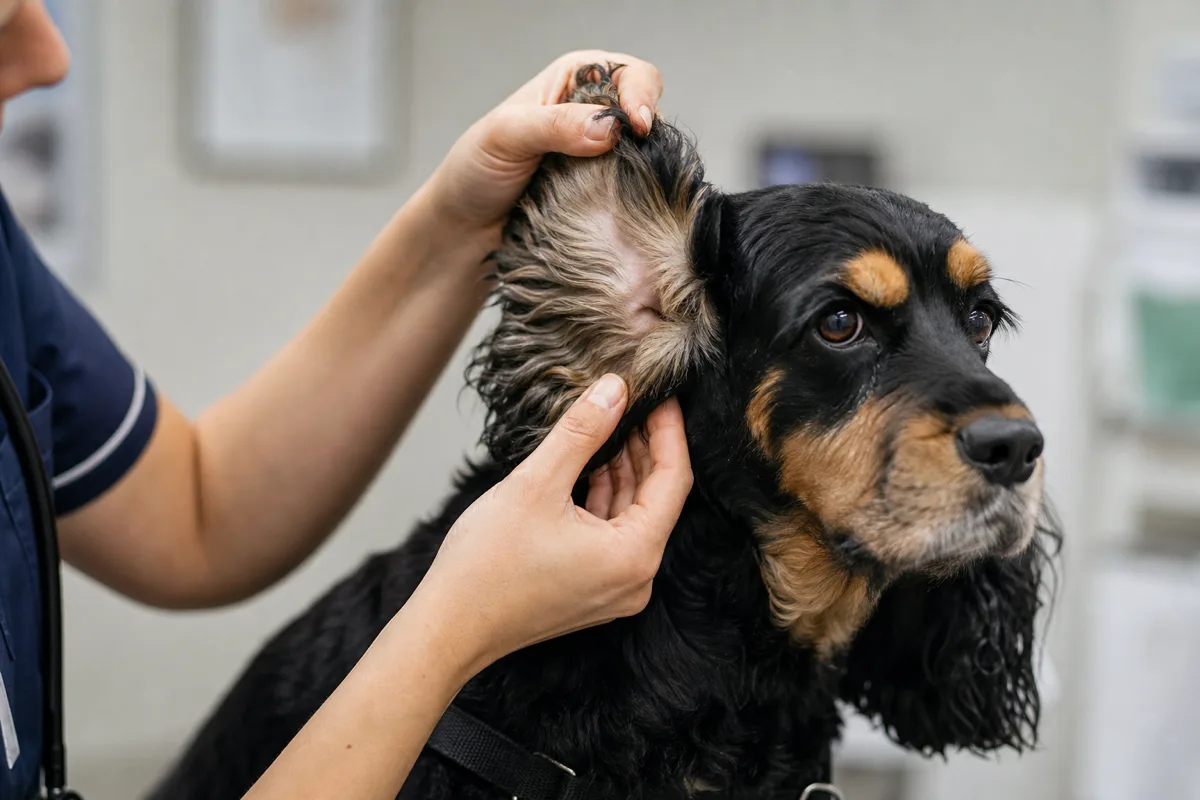
There is no universal cleaning frequency. A healthy ear may need little intervention; a dog with recurrent disease may receive a specific maintenance plan. Use only the cleaner and technique recommended for that dog. Do not probe deeply with cotton swabs, pour home mixtures into a painful ear, or restart old medication without veterinary direction. After bathing, gently dry the external hair and follow the more detailed routine in Grooming & Coat Care.
Orthopedic conditions#
Hip evaluation is part of the current ASC/OFA Cocker screening program. It is a radiographic assessment of breeding stock, not a substitute for examining a pet that is stiff, lame or reluctant to move. OFA notes that radiographic severity and visible discomfort do not always align. A dog from evaluated parents can still acquire an injury or develop orthopedic disease; a dog with an abnormal image may show few outward signs.
Watch for a new limp, repeated skipping, difficulty rising, reduced willingness to climb or jump, altered posture, or sensitivity when handled. Stop strenuous activity and seek veterinary guidance rather than testing the limb repeatedly or giving human pain medicine. Body and muscle condition, nail length, footing and appropriately scaled activity all affect mobility. Exercise advice should be individualized if pain or structural disease is present.
Blood, heart and systemic warning signs#
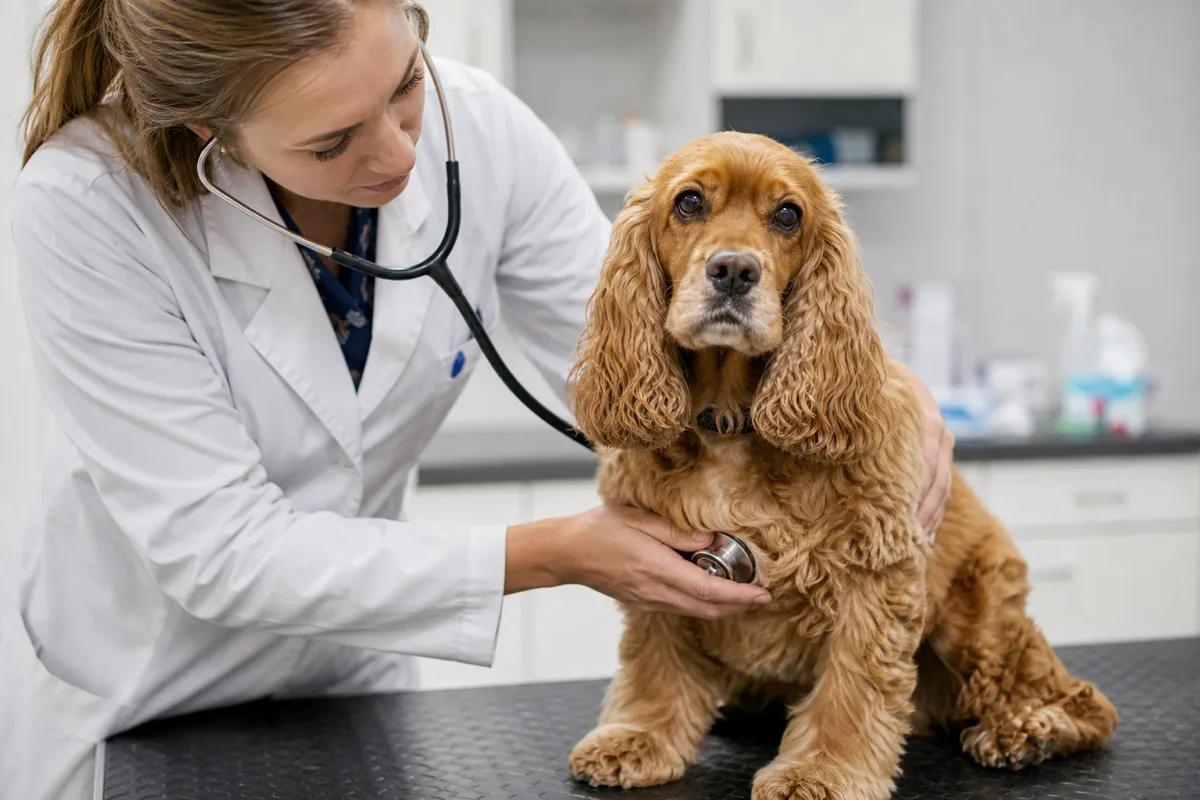
The professional Merck Veterinary Manual review of immune disease identifies a breed predilection for acute immune-mediated hemolytic anemia (IMHA) in Cocker Spaniels. IMHA involves immune destruction of red blood cells, but an owner cannot diagnose it by looking at the gums or urine. Sudden weakness, pale gums, yellow discoloration, rapid or difficult breathing, collapse, or dark red-brown urine requires immediate veterinary contact. There is no routine screening test that proves a healthy dog will never develop IMHA.
Cocker Spaniels also appear among breeds predisposed to dilated cardiomyopathy in Cornell's veterinary cardiology guidance. A new cough, reduced stamina, weakness, faster or harder breathing, abdominal enlargement or collapse needs assessment; respiratory distress or collapse is an emergency. These signs have many possible causes. Supplements, including taurine, should not be started as a substitute for examination and diagnostic testing.
Skin, coat and the information grooming reveals#
A full coat can hide redness, moist areas, parasites, wounds and small masses. During line-combing, part the hair to view the skin and note odor, flakes, hair loss, persistent licking or tenderness. Grooming can reveal a problem; it does not identify whether the cause is allergy, infection, parasites, friction, endocrine disease or something else. Recurrent skin and ear signs deserve a joined-up veterinary history rather than serial product changes.
Photograph a lesion with a size reference, note when it appeared and prevent licking if the clinic recommends a safe method. Avoid applying essential oils, human creams or leftover prescriptions. Sudden facial swelling, widespread hives with vomiting, or breathing difficulty can signal a severe allergic reaction and should be treated as an emergency.
Recommended health screening#
The current published American Spaniel Club health-registry program uses OFA/CHIC and names two core screens for Cocker Spaniel breeding stock: a hip evaluation and an ACVO/CAER eye examination, with the dog over two years old for registry eligibility. Check the current requirements when evaluating a litter, because parent clubs can revise protocols.
| Current ASC/OFA element | What the record tells you | Important limit |
|---|---|---|
| Hip evaluation | OFA radiographs are graded Excellent, Good, Fair, Borderline, Mild, Moderate or Severe; the ASC program also recognizes PennHIP. | It assesses hip phenotype. It does not guarantee comfort, exclude every future mobility problem or replace clinical examination. |
| ACVO/CAER eye examination | A veterinary ophthalmologist records observable inherited eye findings for OFA registration. | OFA certification is valid for 12 months and annual re-examination is recommended. It is a screen, not a comprehensive symptomatic-eye workup. |
How to verify rather than collect logos
Ask for each parent's registered name or number and search the OFA database yourself. Open the individual record, confirm identity, test type, age and date, and read the result. The OFA CHIC program explains that a CHIC number means the tests required by the parent club were completed and made public; it does not mean every result was normal. Review relatives and repeated eye results where available, not only a screenshot selected for the buyer.
The American Spaniel Club's current health-registry page, OFA hip guidance and OFA CAER guidance provide the controlling details. Tests outside the current core list may still be sensible when a pedigree, family history, breeding plan or clinician identifies a reason. A targeted DNA result concerns a particular variant; it is not a whole-dog health certificate. Ask why a test was chosen and how its result informed the mating.
Preventive care#
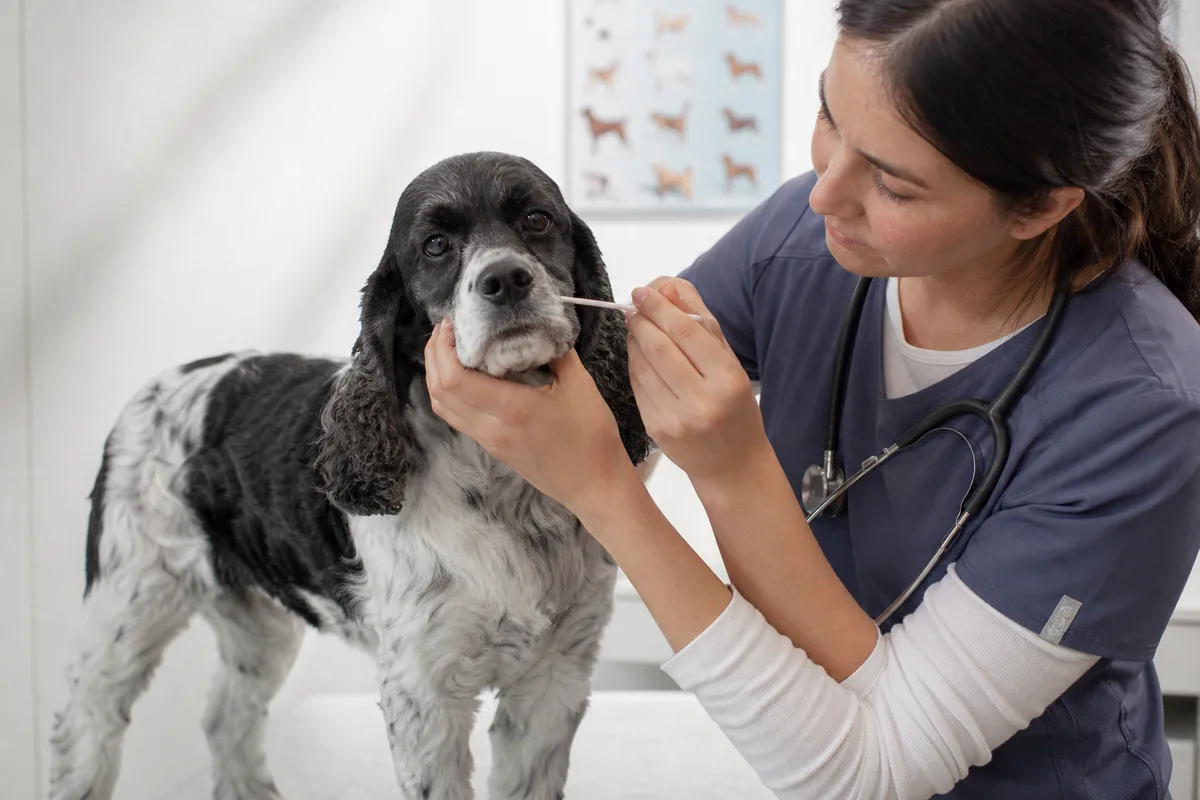
Preventive care should change with life stage, location, lifestyle and medical history. The AAHA Canine Life Stage Guidelines organize visits around physical examination, behavior, nutrition, body and muscle condition, dental health, parasites, reproduction, breed considerations and baseline diagnostics. The interval and tests belong to the veterinarian who knows the patient; “annual bloodwork” or any other universal package should not be presented as a diagnosis-proof guarantee.
Maintain a weight and muscle condition appropriate for the individual, provide regular activity the dog can perform comfortably, build cooperative handling, brush teeth with a dog-safe product, and keep medication and parasite prevention records. Vaccination should follow local law and a veterinary risk assessment; the AAHA canine vaccination guidelines distinguish core protection from additional lifestyle-based needs. Bring changes in drinking, urination, appetite, stool, sleep, mobility, breathing, hearing or behavior to the next visit — sooner when the change is marked or progressive.

Frequently asked questions#
Are American Cocker Spaniels inherently unhealthy?
No. Breed predisposition changes risk; it does not determine an individual dog's outcome. Parent health records, early care, environment and lifelong veterinary care all add information, but none can promise perfect health. Evaluate the actual dog and use breed knowledge to plan observation and screening.
Which health tests should a current U.S. Cocker breeder show?
The current American Spaniel Club health-registry program names hip evaluation and an ACVO/CAER eye examination, registered through OFA, for Cocker Spaniels over two years old. Verify the sire and dam in the OFA database and confirm the protocol again before purchase because requirements can change.
Does a CHIC number mean every result was normal?
No. OFA states that CHIC identifies completion and public availability of the parent club's required tests, not that every result passed. Open the dog's individual record, read each result and date, check identity, and ask the breeder to explain any finding in the context of the proposed mating.
Does a clear DNA panel guarantee a healthy puppy?
No. A validated DNA test addresses a named variant and cannot exclude unrelated, complex, acquired or as-yet-unidentified disease. The current ASC core program is hip and eye based. Additional DNA testing should be selected and interpreted using the pedigree, the laboratory's scope and informed breeding advice.
How often should an American Cocker Spaniel's ears be cleaned?
There is no safe universal schedule. Healthy ears may need little cleaning, while recurrent disease may require a veterinarian-designed maintenance plan. Ask which product and technique suit your dog. Pain, odor, redness, discharge or repeated head shaking calls for assessment rather than more cleaning.
When is an eye or ear problem an emergency?
A suddenly painful, red, cloudy or enlarged eye, apparent sudden vision loss, severe trauma, collapse, breathing difficulty or profound loss of balance warrants immediate veterinary contact. Ear odor or discharge without distress still needs prompt consultation. Because severity cannot be judged reliably online, call a clinic when uncertain.
Sources and further reading#
- American Spaniel Club: ASC and ASCF Health Registry & Rewards Program
- Orthopedic Foundation for Animals: CHIC Program
- Orthopedic Foundation for Animals: Eye Certification and CAER
- Orthopedic Foundation for Animals: Hip Dysplasia
- Merck Veterinary Manual: Ear Infections and Otitis Externa in Dogs
- Merck Veterinary Manual: Glaucoma in Dogs
- Merck Veterinary Manual: Hypersensitivity Diseases in Animals
- Merck Veterinary Manual: Introduction to Emergencies
- Cornell University College of Veterinary Medicine: Canine Dilated Cardiomyopathy
- Cornell University College of Veterinary Medicine: Chronic Ear Disease
- AAHA: 2019 Canine Life Stage Guidelines
- AAHA: 2022 Canine Vaccination Guidelines, updated 2024