The Breed
American Cocker Spaniel Colors & Coat Varieties
American Cocker Spaniel color is easiest to understand when the show-ring vocabulary and the biology are kept separate. The AKC standard recognizes three divisions — Black, ASCOB and Parti-color — with tan points described within them.
A color name is a description, not a personality profile or a health report. It tells you how pigment and white pattern appear in the coat; it does not tell you whether a puppy will be bold, quiet, athletic, easy to groom or medically sound. The guide below uses the American Spaniel Club breed standard and the AKC standard wording as the reference for show terminology. “Variety” here means a conformation division, not a separate breed.
| Division | What it means | Examples |
|---|---|---|
| Black | Solid black, with or without tan points | Black, Black & Tan |
| ASCOB | Any Solid Color Other than Black | Buff, cream, red, brown, brown & tan |
| Parti-color | Two or more solid, well-broken colors, one of them white | Black & white, red & white, roan, tricolor |
The Black division#
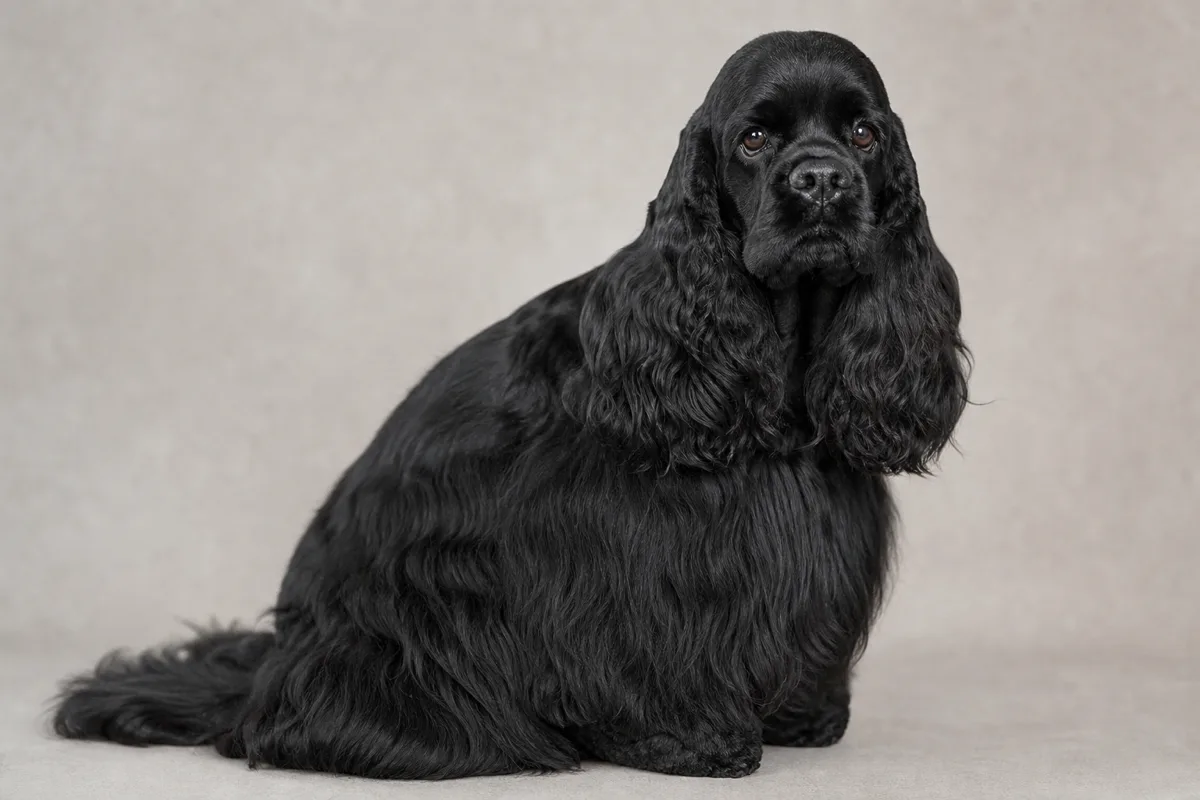
The Black division includes a solid black coat and black with tan points. The standard calls for jet black; brown or liver shading is not desirable in a show coat. A small amount of white on the chest and/or throat is permitted by the standard, while white in another location is a disqualification in conformation. That is a judging rule, not a claim that a white hair elsewhere makes a companion dog unhealthy.
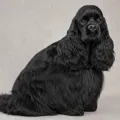 Black
Black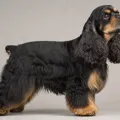 Black & Tan
Black and tan is a pattern, not a loose description for any black dog with a few warm hairs. The expected tan points are a clear spot over each eye; the sides of the muzzle and cheeks; the underside of the ears; all feet and/or legs; and under the tail. A chest marking is optional. The tan may range from light cream to dark red, but it should remain restricted and clearly visible. The standard also cautions against tan that rises and joins across the muzzle, or points that are so faint they are only traces.
ASCOB: Any Solid Color Other than Black#
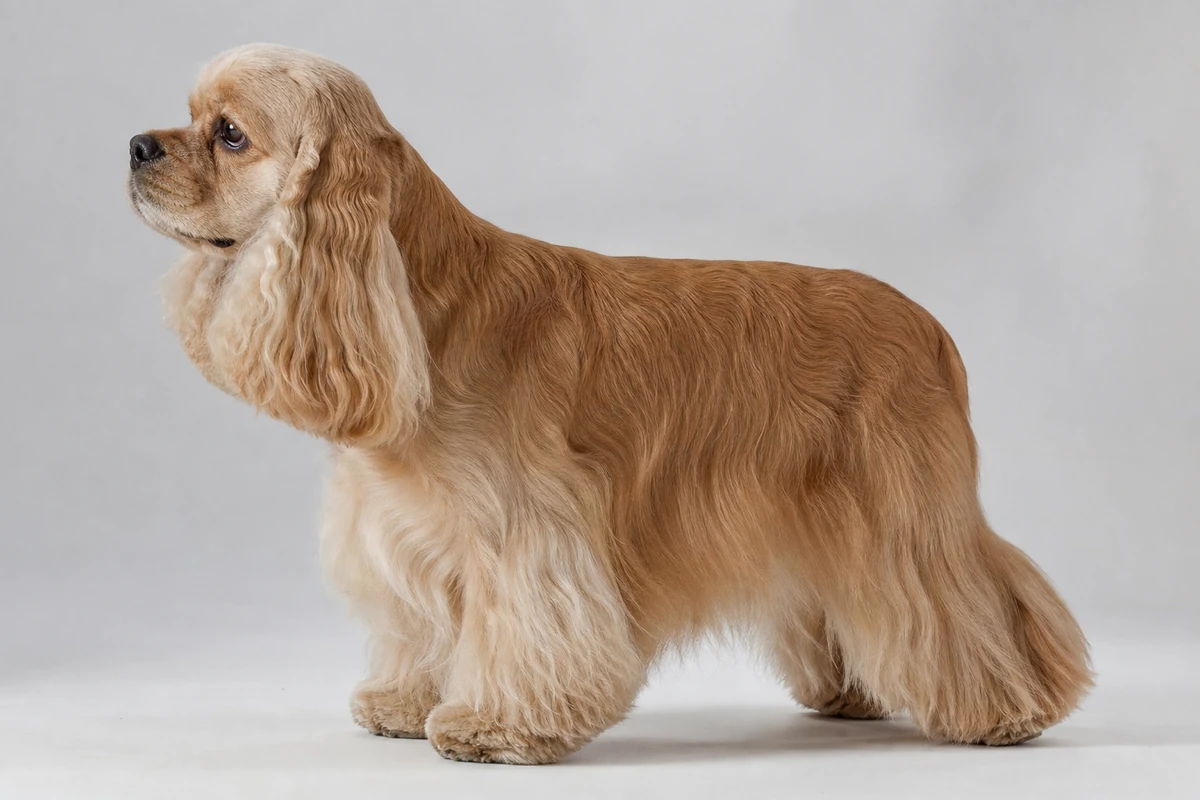
ASCOB is an acronym for “Any Solid Color Other than Black.” It covers a continuous visual range from the lightest cream to the darkest red, and includes brown and brown with tan points. The base coat should be a uniform shade, although lighter feathering is permissible. As in the Black division, a small amount of white may appear on the chest or throat; white elsewhere is a disqualification under the show standard.
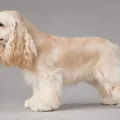 Cream
Cream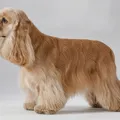 Buff
Buff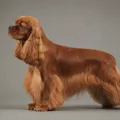 Red
Red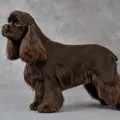 Brown
Brown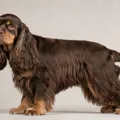 Brown & Tan
People often use buff, gold, red and cream as if they were sharply separate boxes, but the standard describes a range and individual coats sit along it. “Brown,” “liver” and “chocolate” may be used informally for a brown-pigmented dog; the registry and the dog’s documented pedigree matter more than a seller’s marketing label. Brown and tan follows the same restricted point pattern described above for black and tan. Do not infer temperament, trainability or disease risk from a darker or lighter ASCOB coat.
The Parti-color division#
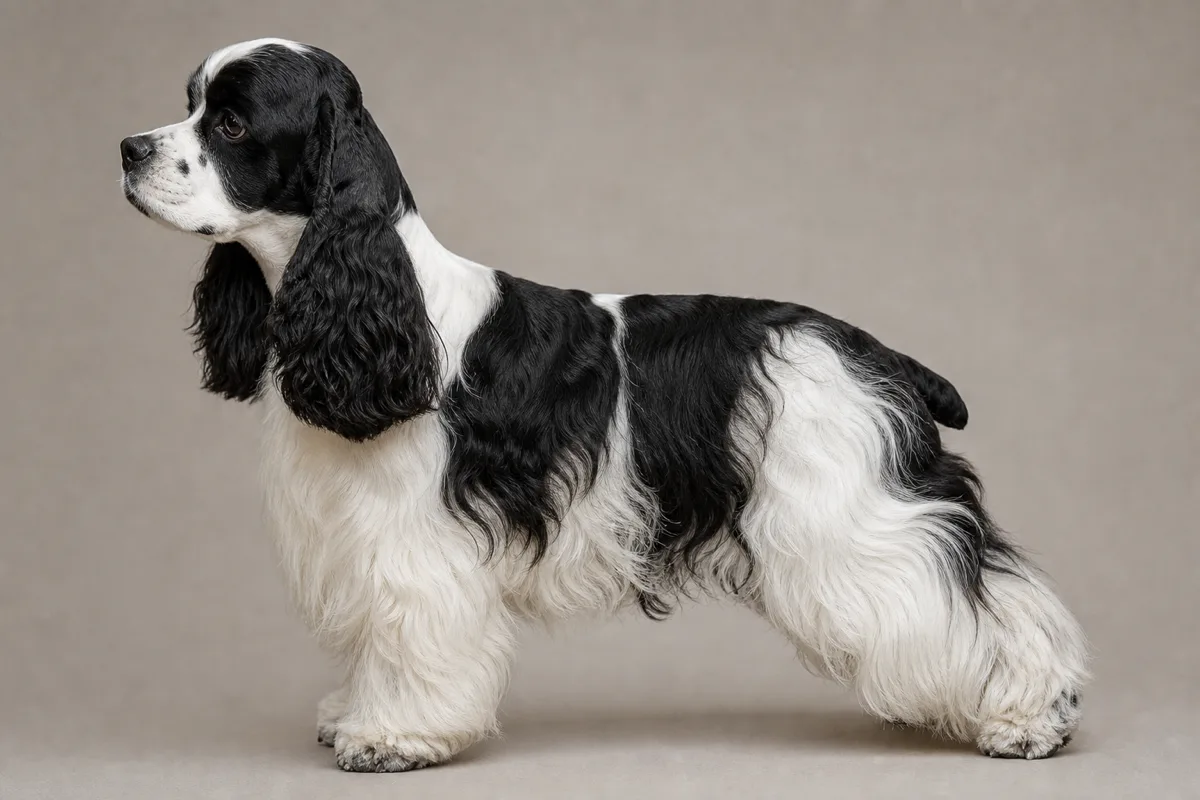
Parti-color means two or more solid, well-broken colors, one of which must be white. The named combinations are black and white, red and white (with red ranging from cream to dark red), brown and white, and roans. The standard allows those combinations with tan points as well. A primary color covering 90 percent or more is a disqualification in the show ring. This percentage is a conformation threshold, not a genetic boundary between healthy and unhealthy dogs.
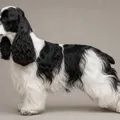 Black & White
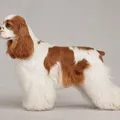 Red & White
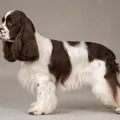 Brown & White
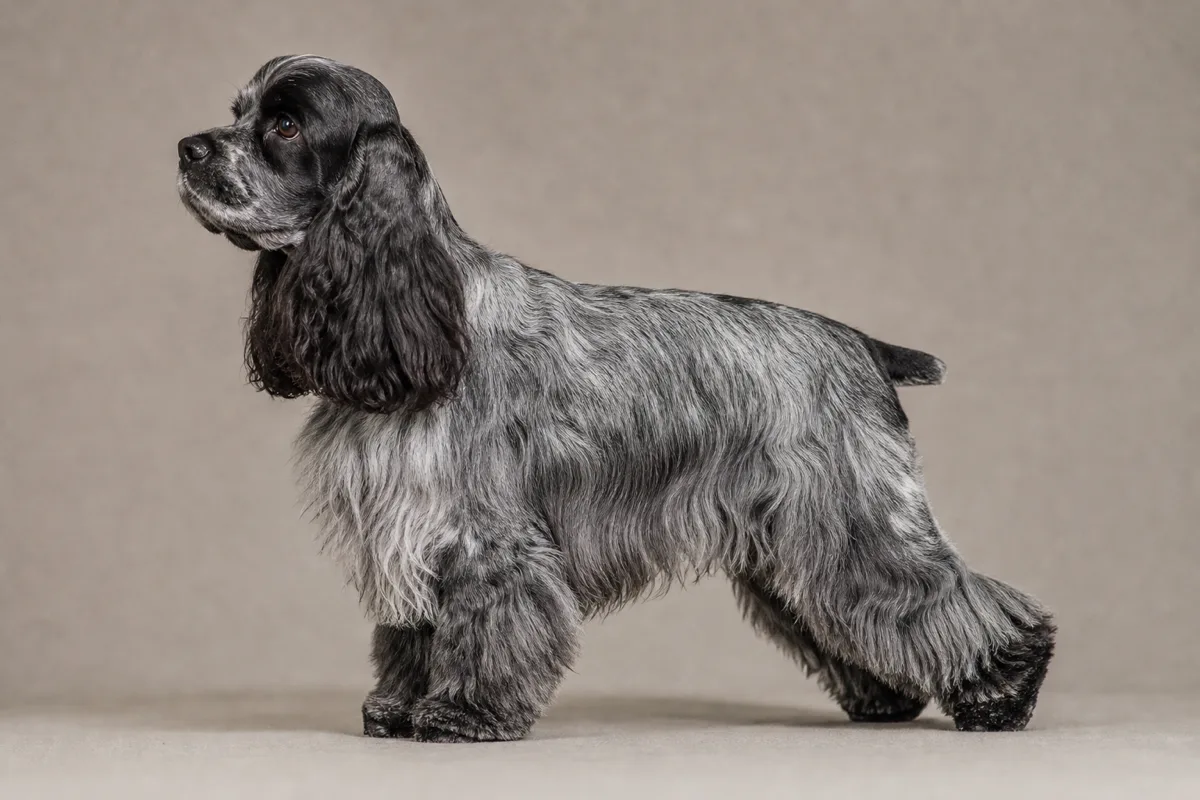
 Blue Roan
 Tricolor
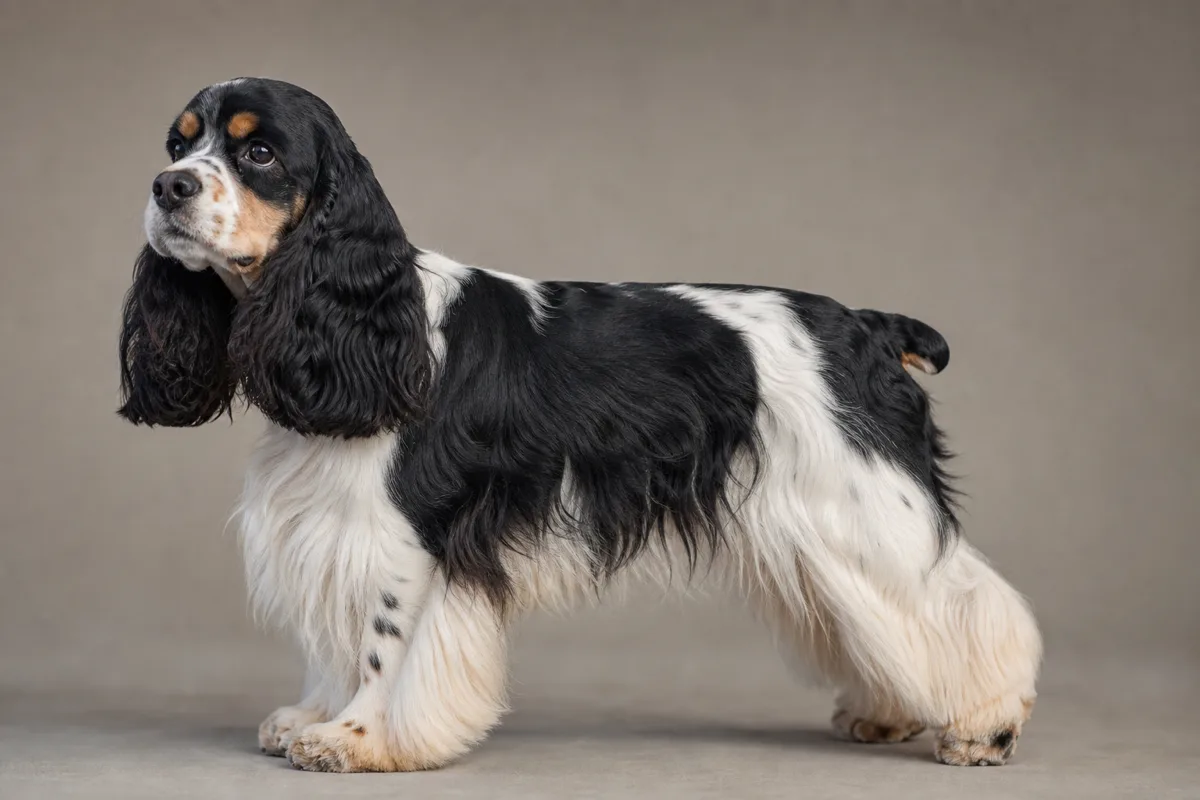
Tricolor
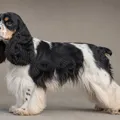
Tricolor is not a fourth division. It is a parti-color pattern, usually black-and-white or brown-and-white, with the defined tan points added. Look for tan over the eyes, at the muzzle and cheeks, beneath the ears, on the feet and/or legs, and under the tail. A tricolor is therefore recorded and judged within Parti-color, not Black or ASCOB. The word describes visible pattern; it does not predict a dog’s behavior.
Roan
In a roan, white and colored hairs are intermingled through an area rather than separated into only clean patches. Blue roan describes black hairs mixed through white; red roan and brown roan use the corresponding red or brown pigment. Roan is explicitly classified as Parti-color in the standard. A puppy’s coat can look more heavily flecked as its adult hair arrives, so a photograph at one age is not a guarantee of the final visual balance.
Pigmentation, markings and genetics#
Genetics gives useful background, but it should not be confused with the breed-standard labels. The University of California, Davis Veterinary Genetics Laboratory explains that two basic pigments underlie canine coat color: eumelanin (black or brown pigment) and phaeomelanin (red or yellow pigment). Interacting loci, including MC1R (E), ASIP (A), K and the brown locus, influence whether pigment is produced and where it appears. Brown can modify black pigment without changing red/yellow pigment. White spotting is a separate, complex patterning process; the amount of white can vary even among dogs with related genotypes.
That is why “black and tan,” “tricolor,” “roan” and “parti” are useful descriptions but not complete genetic formulas. A DNA result can report particular variants at tested loci, yet a test is not a substitute for a registry record, a veterinarian’s examination or a complete assessment of the individual dog. It is also unwise to reverse-engineer a puppy’s parentage from one patch of white or from a coat that is still changing.
Show-standard language versus genetic language
The show standard answers a practical question: how should this dog be entered and assessed in an AKC conformation class? Genetics asks a different question: which inherited variants help produce the pigments and pattern? The two vocabularies overlap, but they are not interchangeable. For example, “ASCOB” is a registration and judging category, not the name of one gene. “Roan” describes a visible mixture of hairs, not a promise that every individual has an identical molecular route to that appearance.
Likewise, a disqualification is not a diagnosis. The standard’s limits on white in a solid division, on a primary color covering 90 percent or more of a parti, or on tan exceeding the stated amount describe ring eligibility. They do not establish that a pet with a mismarked coat is sick, nor do they make a correctly marked show dog automatically healthy. Health decisions should be based on the individual, veterinary care and relevant records. This distinction is especially important when an advertisement uses “show quality” as if it were a health guarantee.
Merle is not an accepted American Cocker Spaniel color combination in the AKC/ASC standard. UC Davis describes merle as an incompletely dominant pattern associated with the PMEL gene in dogs, so the word should not be used as a synonym for blue roan. Sable, “exotic,” or “rare” labels likewise deserve calm questions about registration, pedigree and the seller’s evidence. Do not pay a premium for a color, and do not make a breeding decision from a marketing label alone.
How to observe a puppy responsibly#
Use color as one small part of identification. Ask the breeder to show the registration description, both parents, and photographs taken in ordinary daylight. Compare the puppy’s nose and eye-rim pigment, colored patches, tan points and white distribution with the written description, while allowing for soft puppy coat, grooming, sun bleaching and roaning that may become clearer with age. If the label matters for a show entry or a future litter, request the registry’s official opinion or a suitably qualified breed expert rather than relying on an online quiz.
For a pet home, the practical questions are different: observe the puppy’s movement, appetite, recovery from mild novelty and interaction with people, then arrange a veterinary examination. Color cannot certify hearing, vision, joints, skin, eyes or any other aspect of health. It also cannot certify a stable temperament. Those questions require records, observation over time and professional care.
Care is independent of color#
Every American Cocker Spaniel has the same basic coat-care needs: regular brushing to prevent mats, careful ear and feathering checks, bathing when appropriate, nail care and a groom that preserves comfortable movement. White furnishings may show tear or saliva staining more visibly, while dark coats can show dust, but that is a cosmetic difference. Use products chosen for canine skin, dry the ears and feathering thoroughly, and ask a veterinarian about persistent odor, itching, redness, hair loss or sudden pigment change. Never bleach, dye or chemically strip a coat to make a color appear “correct.”
Parti and roan coats can make small skin flakes, burrs or wet tangles easier to miss in a busy grooming session, while a dark solid coat can hide early redness. A calm, hands-on check in good light is more useful than judging cleanliness by color. Trim only with tools and techniques appropriate to the dog’s coat and experience level; when in doubt, use a qualified groomer. Coat texture, feathering and skin condition deserve the same attention whether the dog is black, buff, brown, red, parti or roan.
American Cocker Spaniel color FAQ#
What does ASCOB mean?
ASCOB means Any Solid Color Other than Black. It includes the cream-to-red range and brown, with or without the defined tan-point pattern.
Is black and tan a parti-color?
No. Black and tan belongs to the Black division. A black-and-white dog with tan points is a tricolor and belongs to Parti-color.
Is blue roan a blue coat?
“Blue” describes the visual effect of black hairs mixed through white. In the Cocker standard, blue roan is a Parti-color pattern, not a separate solid blue division.
Can I tell an adult color from a puppy photo?
Not always. Feathering, roaning and pigment can look different as the coat matures, so use documented parentage and an official description when precision matters.
Does color predict temperament or health?
No reliable conclusion should be made from color alone. Evaluate the individual dog, health records, veterinary findings and observed behavior.
Is merle an American Cocker Spaniel color?
It is not an accepted color combination in the AKC/ASC standard. Treat a merle claim as a reason to verify pedigree and seek informed, breed-specific advice.
Authority sources#
- American Spaniel Club: Breed Standard
- American Kennel Club: Cocker Spaniel standard (PDF)
- AKC: Cocker Spaniel breed information
- American Spaniel Club: Choosing a Cocker
- UC Davis Veterinary Genetics Laboratory: Dog Coat Color and Type
- UC Davis VGL: Dog Coat Color Basic Panel
- UC Davis VGL: Piebald/White Spotting
- UC Davis VGL: Merle