Care
American Cocker Spaniel Grooming & Coat Care
The American Cocker Spaniel has a beautiful, silky coat that rewards regular handling. It is not a “wash-and-wear” coat: feathering collects burrs and moisture, long ears need observation, and a neglected tangle can become painful. This guide explains what to do at home, what to leave to a professional, and when a problem belongs with your veterinarian.
Think in maintenance, not a universal timetable. The right interval changes with coat length and texture, weather, swimming, outdoor work, age, and skin history. Aim to check the coat, ears, eyes, feet and nails often enough that small changes are easy to see; adjust the plan with your groomer or veterinarian.
Know the coat you are caring for#
The American Cocker’s breed standard describes short, fine hair on the head, medium hair with some undercoat on the body, and silky feathering on the ears, chest, abdomen and legs. Coats vary: a lightly coated companion may need less time than a dense, wavy dog, while a field-going dog collects more debris than a sofa companion.
Texture matters as much as length. Silky, flat or slightly wavy hair can be combed through; cottony or curly hair holds knots. Mats commonly begin behind ears, in armpits, under the chest, between back legs and where a harness rubs. The American Spaniel Club breed standard gives context for the natural outline, but comfort and lifestyle should guide a pet trim.
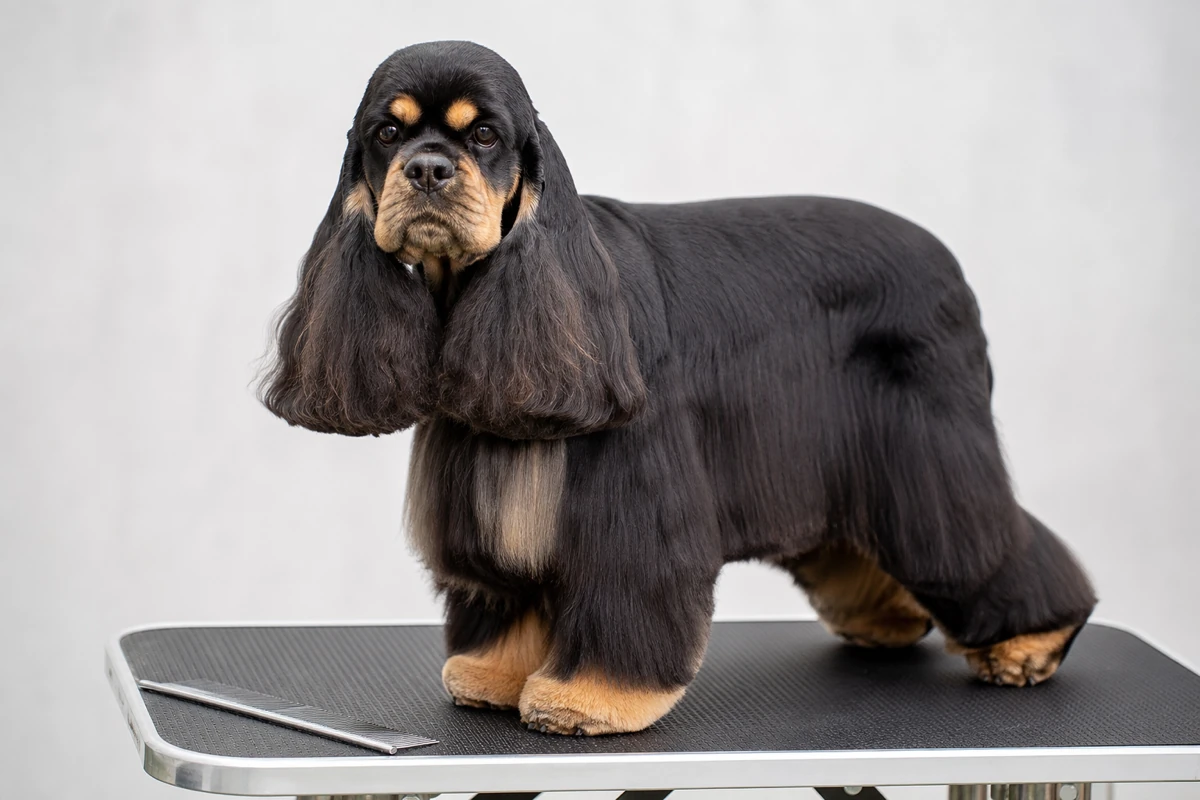
A sensible grooming kit#
Buy tools for the coat in front of you, not for an imagined show dog. A quality metal comb with wider and finer spacing should reach the skin without snagging. Add a light slicker brush, a pin brush for long feathering, a non-slip mat, dog shampoo and conditioner, towels, and a dryer on a cool or warm—not hot—setting.
- Brushes and comb: use a light touch; a brush that scratches is not a better brush.
- Nail equipment: choose clippers or a grinder you can control, plus styptic powder recommended for pets in case a nail is nicked.
- Ear supplies: use only a cleaner your veterinarian or groomer has approved for this dog. Cotton balls or gauze are safer for the outer canal than cotton swabs.
- Scissors and clippers: leave close work around skin, eyes, canals and mats to someone trained.
Keep equipment clean, dry and easy to reach. Short, predictable checks are easier for a dog to accept.
Brushing without hiding the mats#
Start with a dry coat and relaxed dog on a secure, non-slip surface. Work in small sections: lift a thin layer, brush from skin outward, then move the parting higher. Finish with the metal comb. If it will not pass from skin to ends, the section is not finished, even if the surface looks smooth.
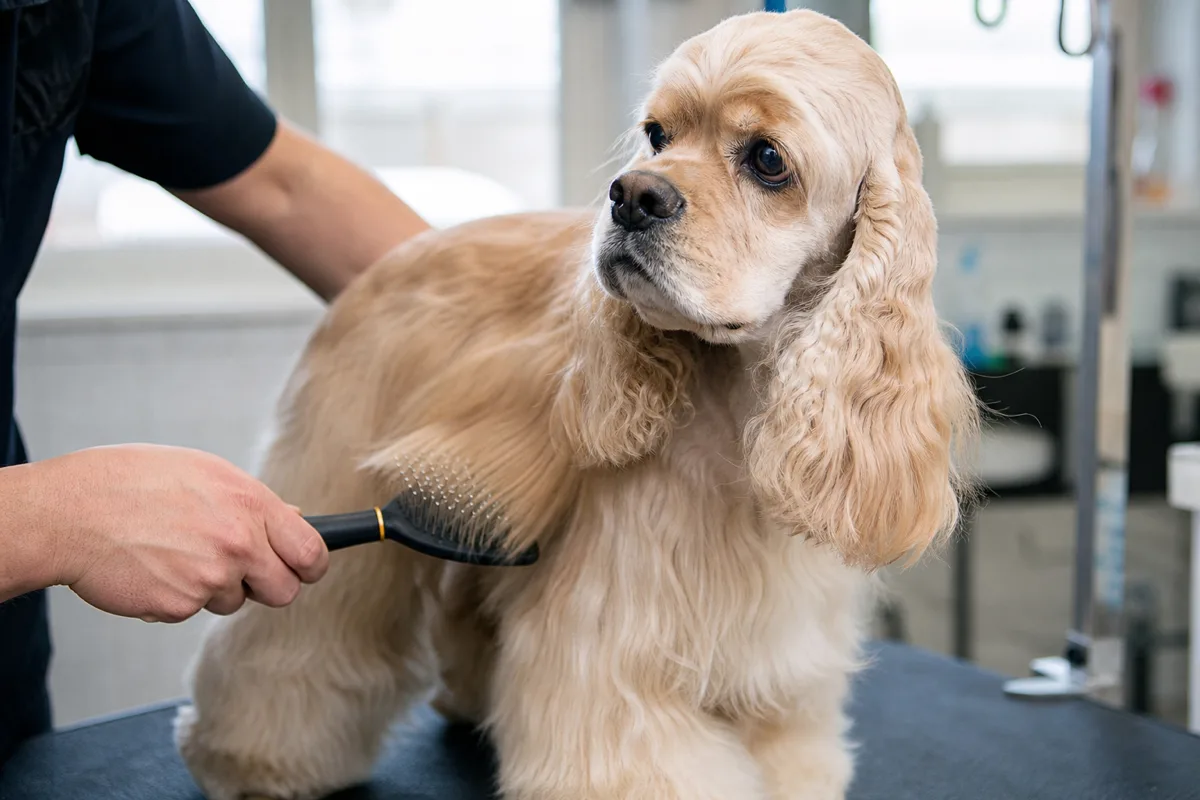
Give ears, chest, elbows, belly, inner thighs, tail and harness area extra attention. Remove burrs after wet walks. For a small loose knot, hold hair near the skin, separate the ends and work from tips inward. Stop if the dog shows pain or the knot is tight. Never yank a mat or slide household scissors between it and skin; extensive matting can hide damaged skin and may need a veterinarian as well as a groomer.
Ears, eyes and skin checks#
Ear care
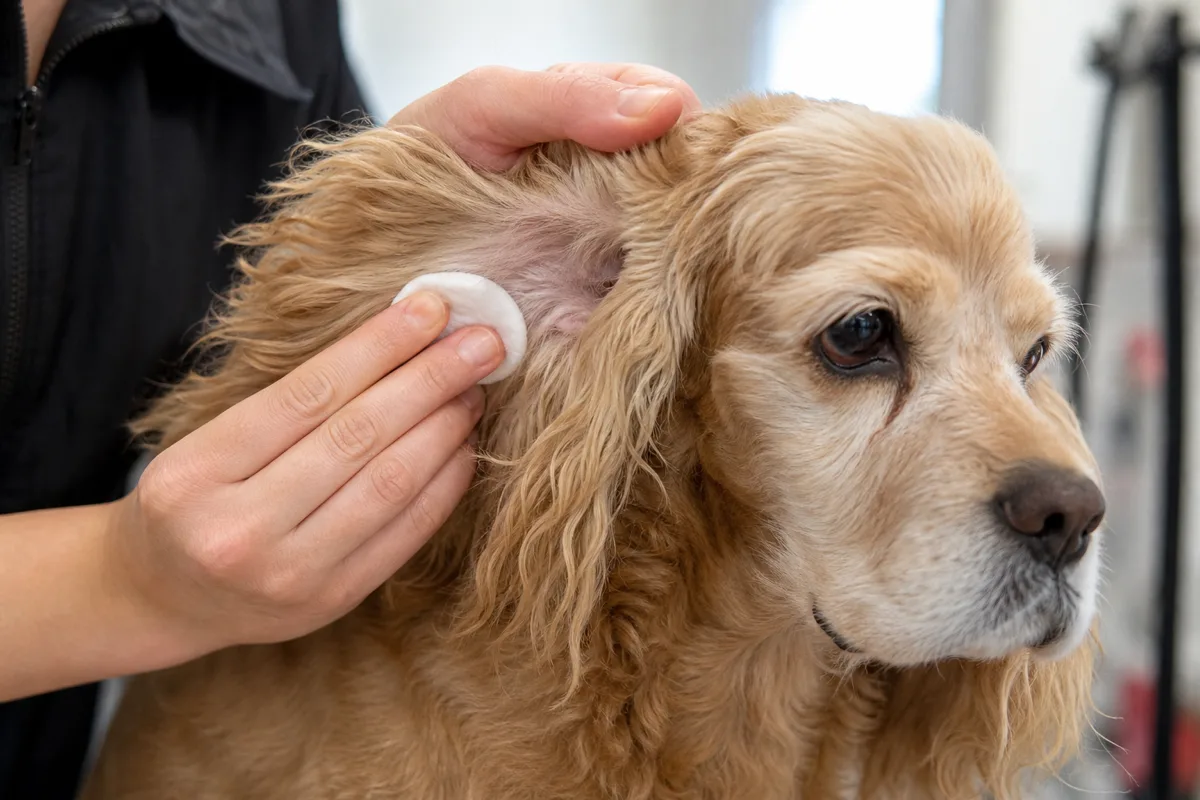
Long, folded ears reduce ventilation and stay damp after bathing or swimming. Look and smell before cleaning: healthy ears should not be hot, very red, painful, foul-smelling or full of new discharge. If your veterinarian recommends a cleaner, apply it as directed, massage the base, let the dog shake, and wipe only the visible area. Do not probe with cotton swabs, pour in home remedies, or routinely pluck canal hair without advice. Over-cleaning an inflamed ear can make matters worse.
Eyes and face
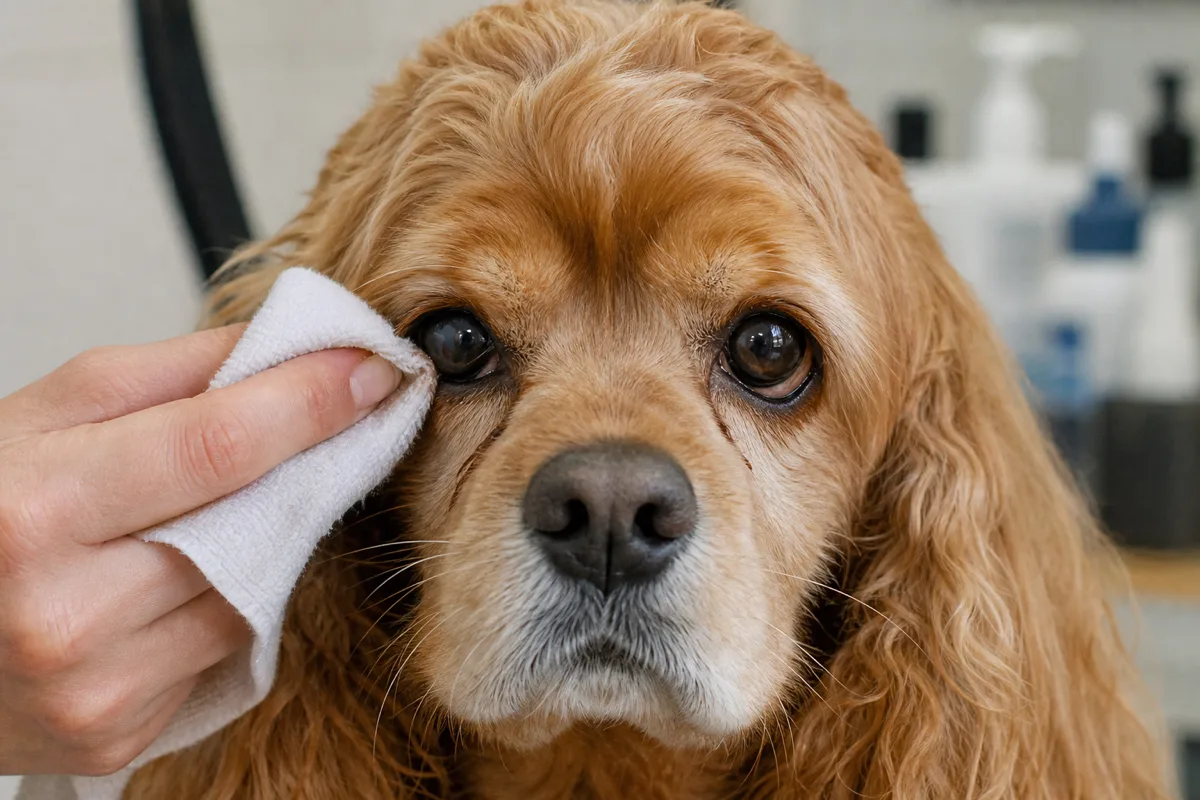
Use a clean, damp cloth or pet-safe wipe for tear residue, with a fresh part for each eye. Keep facial hair from rubbing the eye; close trimming belongs to a groomer. Redness, squinting, cloudiness, sudden tearing or resistance to face handling needs veterinary advice, not stain treatment.
Skin during grooming
Run your hands over the skin while brushing. Look for damp patches, scabs, parasites, bumps, hair loss or a rash beneath a collar and around ears. Do not diagnose from an online photograph or cover it with fragrance. Arrange veterinary guidance if a change persists, spreads, smells, bleeds or seems itchy.
Bathing and drying#
There is no single correct bath interval. An indoor dog may need a bath when dirty; a swimmer, muddy explorer or dog with a veterinary skin plan may need another approach. A shorter trim makes rinsing and drying easier. Ask your veterinarian if frequent bathing is for a skin problem.
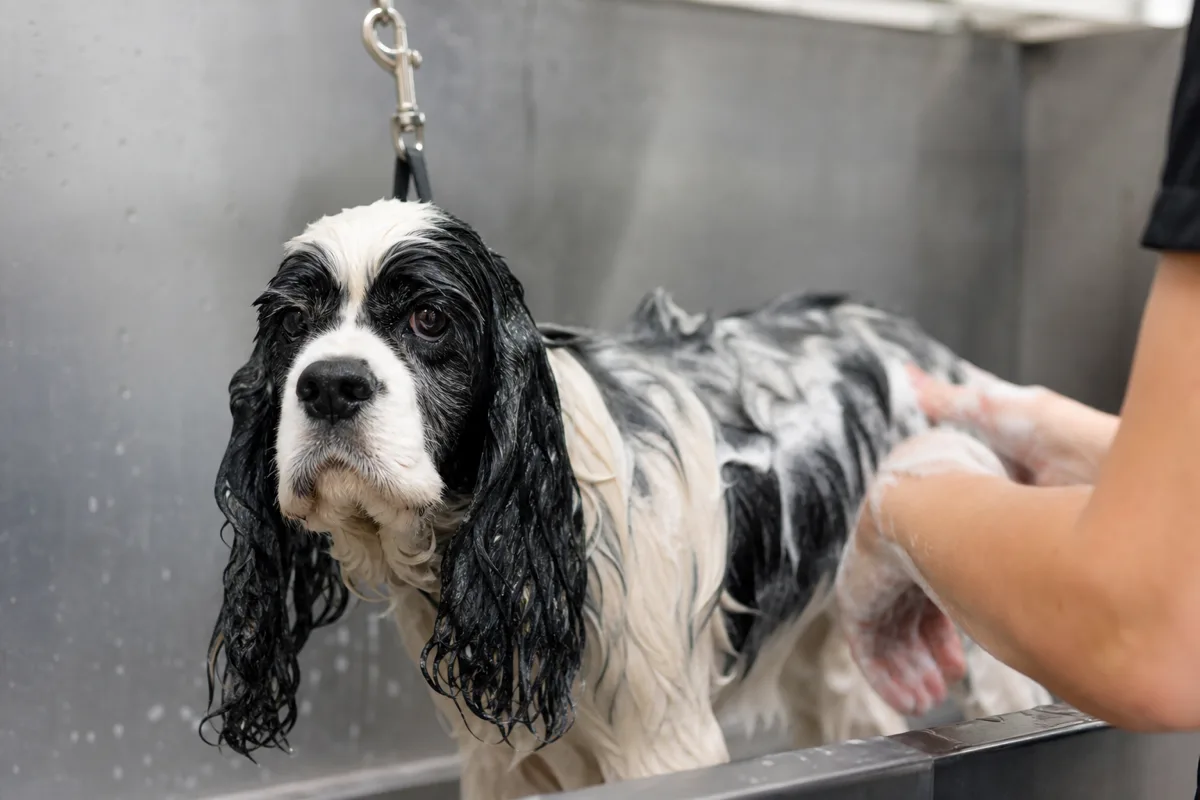
Brush out burrs and tangles first. Use lukewarm water and dog shampoo; human products may not suit canine skin. Shield eyes and avoid filling ear canals. Rinse completely, condition if appropriate, towel-blot, then dry with controlled air while checking temperature. Never leave a dense coat damp under ears, collar, armpits or belly. See VCA coat-care guidance for why bath needs vary and tangles should be removed first.
Feet, nails and sanitary areas#
Check paws after walks. Trim hair level with the pads when it grows between them, remove packed mud only after softening it, and look for cracks, grass seeds or tenderness. Keep the sanitary area tidy if long hair becomes soiled, but avoid shaving irritated skin without advice.
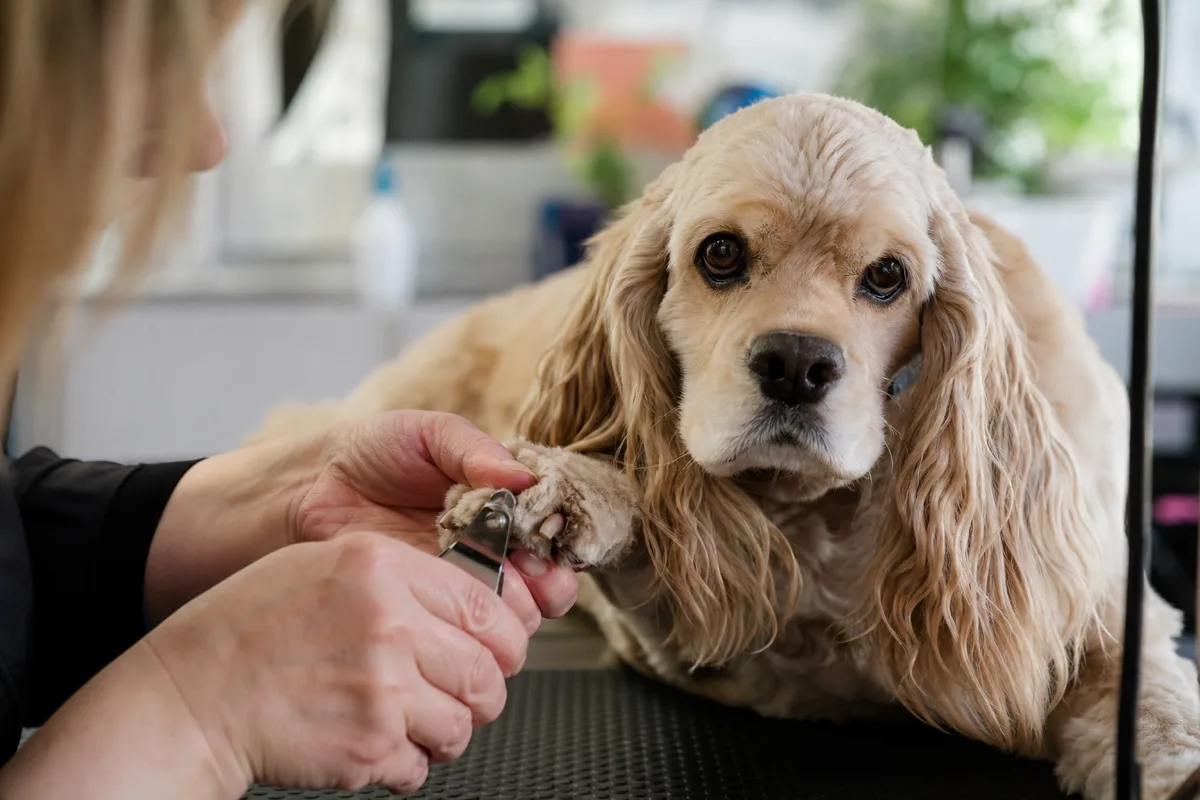
Nail length depends on growth, exercise and flooring. A click on hard floors, a changed gait, or nails touching the ground while standing suggests it is time to assess them; it is not a universal calendar rule. Take off tiny amounts at a time, or ask a groomer or veterinary nurse to demonstrate how to avoid the quick. Short, frequent practice is kinder than waiting for overgrown nails to require a major cut.
A flexible home routine#
Use the coat as your timetable. A practical rhythm might look like this, then change as the dog, season and haircut change:
| Opportunity | What to check |
|---|---|
| Brief daily handling | Touch ears, paws and face; reward calm stillness. |
| Regular coat checks | Line-brush feathering and comb behind ears, legs, belly and harness. |
| After water or mud | Rinse or wipe debris, then dry the coat and ear flaps fully. |
| At a grooming session | Inspect skin, eyes, ears, pads and nails and record changes. |
| When the trim no longer works | Book a groomer or revise the length before mats become widespread. |
Teach a puppy that grooming is safe#
Begin with a quiet mat on the floor, not a high table. Touch one paw, lift one ear, or make one brush stroke, then feed a small reward and stop while the puppy is still comfortable. Gradually add the sound of a clipper or dryer at a distance, pairing it with food. Keep sessions brief and never pin a struggling puppy down. A second person can deliver treats while the handler supports the body safely.
Practice the positions a groomer will need: standing, turning, looking at the face, offering a paw, and tolerating a towel. If the puppy freezes, pants, bites, or tries repeatedly to escape, make the next session easier. A breeder, force-free trainer, veterinarian or experienced groomer can help you build a plan. Early cooperation is more valuable than achieving a perfect haircut at home.
Choosing a professional groomer#
Many owners combine home brushing with professional bathing and trimming. Ask about experience with Cockers, puppies, seniors and anxious dogs; drying method; mat policy; supervision; and what happens if a painful ear or skin lesion is found. Bring a photo and describe whether you want easy maintenance, a natural outline or a show presentation. A good groomer explains compromises rather than promising a fixed result.
Companion trim
A pet or puppy-style trim shortens the body and tidies feet, face, ears and sanitary areas while leaving a recognisable Cocker outline. It reduces, but does not eliminate, brushing. Shorter is not automatically healthier: protect skin from clipper irritation and sun exposure. Choose a length that matches activity and your realistic maintenance time.
Show coat versus companion coat
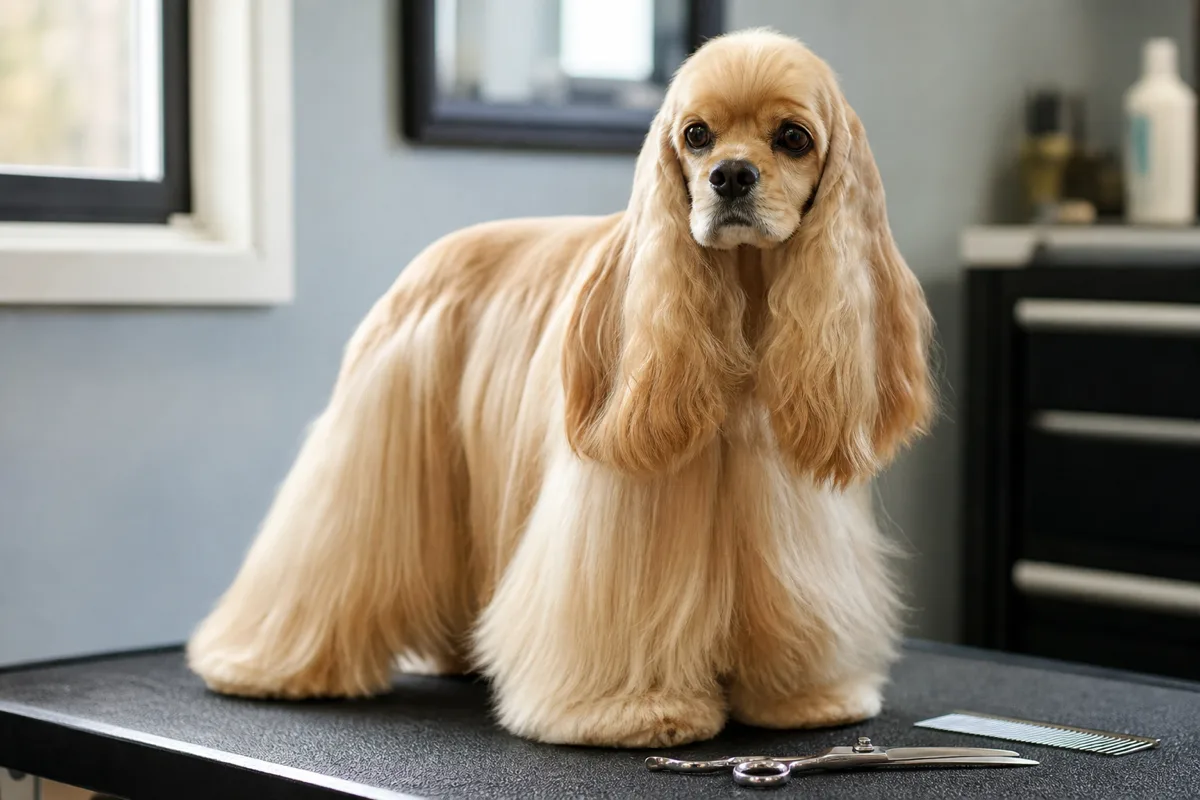
For a show presentation, the coat is preserved and shaped to the breed outline; the back is generally carded or stripped and scissored, while feathering is blended and conditioned. It demands skill and frequent coat work. A companion trim is a sensible welfare choice when a full skirt cannot be maintained. The best cut keeps the dog comfortable and the coat combable.

Warning signs and the veterinary boundary#
Stop grooming and contact a veterinarian for a painful, swollen, foul-smelling or discharging ear; repeated head shaking; head tilt or balance change; a red or squinting eye; sudden vision change; bleeding skin; severe itch; a deep wound; or a mat that has damaged skin. Do not use leftover ear drops, essential oils, vinegar, human creams or pain medicine without veterinary direction. Merck Veterinary Manual guidance explains why discharge and pain need diagnosis.
Grooming helps you observe, but it is not veterinary care. For recurring skin or ear problems, ask the vet for an individualized plan.
American Cocker Spaniel grooming FAQ#
How often should I brush an American Cocker Spaniel?
Often enough that a metal comb reaches the skin through each feathered area without snagging. A full coat, wet weather, outdoor activity or harness may require more attention than a short trim. Use calm sessions, not a calendar promise.
Can I shave my Cocker Spaniel?
A groomer may clip short to remove severe mats safely or make a pet’s routine manageable. It is not a cure for skin or ear disease, and checks remain necessary as the coat grows. Discuss the length with a qualified groomer, and involve a veterinarian when skin is involved.
Should I pluck the hair from the ear canal?
Not automatically. Removal can irritate healthy tissue, while some dogs need a vet-directed plan. Ask what should be trimmed around the opening and what should be left alone.
What if I find a mat?
Do not pull it or force a painful brushing battle. A small, loose tangle may come apart from the tips with fingers and a comb. Tight, widespread or skin-level mats need a professional; ask a veterinarian to examine sore, damp or bleeding skin.
How can I keep ears out of food and water?
Some Cockers do well with a clean meal snood or bowl that keeps ears outside. Wash wet fabric and still inspect and dry the flaps. A bowl accessory is convenience, not treatment.
When should my puppy visit a groomer?
After appropriate veterinary guidance for outings, arrange a gentle introduction focused on handling, bathing and drying rather than a dramatic haircut. Tell the groomer the puppy’s age, vaccination status, temperament and concerns. Continue tiny home practices between visits.
Sources and further reading#
These references support the breed description, grooming technique and veterinary safety boundaries. They are starting points, not a diagnosis or substitute for your dog’s care team.
- American Kennel Club: Cocker Spaniel breed information and grooming guidance
- American Spaniel Club: American Cocker Spaniel breed standard
- American Kennel Club: How to Groom a Dog at Home
- American Kennel Club: How to Clean a Dog’s Ears Safely
- American Kennel Club: Why It’s Worth Having Your Dog Groomed Professionally
- VCA Animal Hospitals: Grooming and Coat Care for Your Dog
- VCA Animal Hospitals: Ear Cleaning and Medication Instructions
- VCA Animal Hospitals: Puppy Bathing and Nail Trim Tips
- Merck Veterinary Manual: Ear Infections and Otitis Externa in Dogs